
Ingredients
Táo mèo
Docynia indica
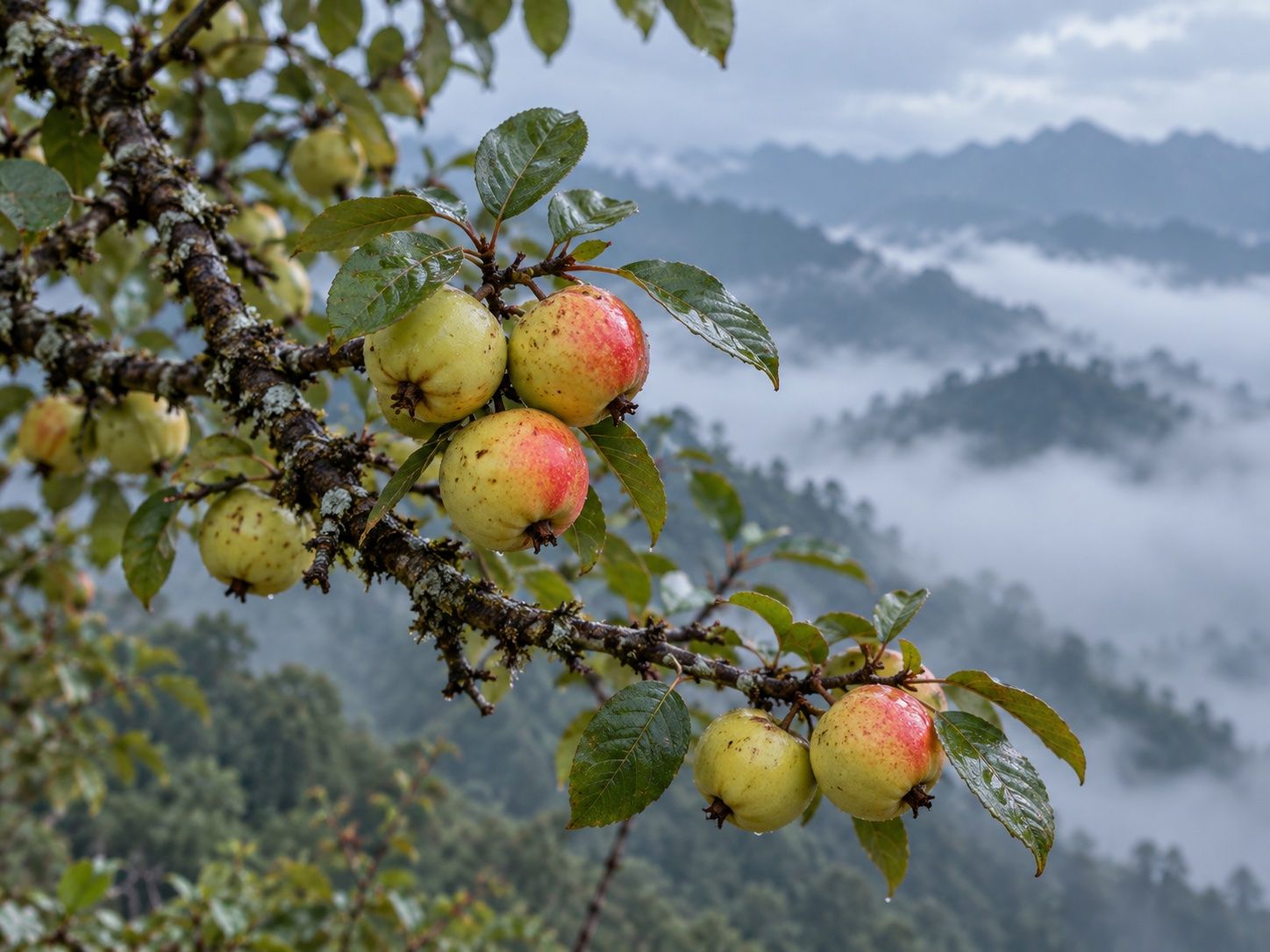
Táo mèo (also written tao meo, or sơn tra) is a small, sour wild apple that grows high in the mountains of northwest Việt Nam. Hmong families have picked it for generations, mostly to steep in rice spirit. We ferment it instead.
If you have seen the word on our bottles or heard it in a bar and wondered what it is, this page is for you. Short version: it is the closest thing Việt Nam has to a cider apple, and it was growing here long before anyone thought to call it that.
The fruit
Táo mèo is the fruit of Docynia indica, a tree in the rose family, the same family as apples, pears and quince. It is not a true apple (genus Malus), but it is a close cousin, which is why Vietnamese calls it táo, Japanese visitors call it ベトナムのリンゴ, and old botanists filed it under Cydonia, the quince.
The trees grow wild on cold, foggy mountainsides at 1,000 to 2,000 m in Sơn La, Yên Bái, Lào Cai and Lai Châu. Some stands near Mường La are hundreds of years old. The name is said to come from the Hmong people (once called “Mèo” in Vietnamese) who live where it grows and who still do most of the harvesting.
The tree flowers white in February and March, and the fruit ripens from late August to the end of October. A ripe táo mèo is 2–3 cm across, round or slightly egg-shaped, yellow-green with a pink or red blush, and hard enough to bounce.
Bite one raw and you get a sharp hit of acid, a mouth-drying tannin, and underneath that a clear apple and quince aroma with a little honey. It is too sour to snack on, which is exactly the profile that makes a great fermented drink.
How Việt Nam uses it
Ask anyone from the northwest and the first answer is rượu táo mèo. Whole or halved fruit goes into a jar with rice spirit and sometimes sugar, and sits for months. The result is amber, sweet-sour and strong, and it is the drink that gets poured for guests in Sơn La and Yên Bái. Tourists bring it home as a souvenir, which is why German and Japanese visitors search for it before they even arrive.
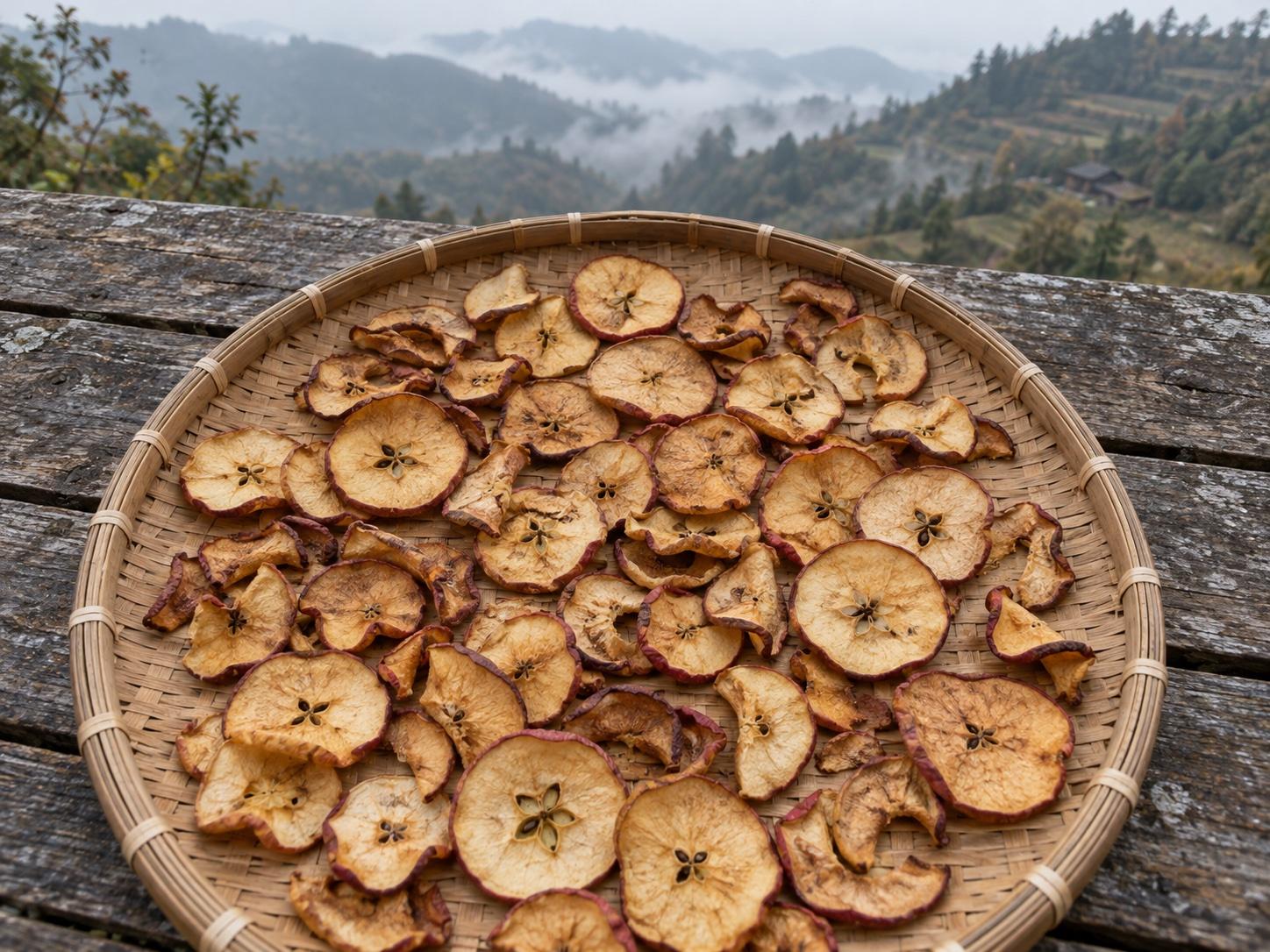
The second use is dried. Sliced and sun-dried, táo mèo is steeped as a tea, and traditional medicine knows it by its Sino-Vietnamese name, sơn tra. From the rượu jar to the teapot, the fruit is part of everyday life in the highlands.
The third use is newer. Over the past decade táo mèo has gone from a tree you only find in the forest to one that is planted and tended as well. In villages like Nậm Nghiệp, families now grow it alongside gathering the wild fruit, and the orchards have been good for the region.
Why it ferments so well
The best cider apples in Europe are not eating apples. They are small, sour, tannic fruit that nobody would bite into raw, grown on cold hillsides and valued for exactly the qualities that make them unpleasant fresh. Táo mèo is that fruit, growing wild in Việt Nam.
Three things make it work:
- Acid. It arrives sharp, so the finished drink stays bright and dry instead of going flat and sweet the way many tropical fruits do once the sugar is gone.
- Tannin. The mouth-drying grip that makes raw táo mèo hard to eat gives a ferment structure and a long finish, the same job tannin does in red wine or a proper dry cider.
- Aroma. Apple, quince and a little honey survive fermentation, so the drink still tastes like the fruit rather than like generic alcohol.
Rượu táo mèo gets its character by soaking the fruit in spirit. Fermentation gets it by letting wild yeast eat the fruit’s own sugar. The second route gives a lighter, drier, more sparkling drink at cider strength rather than spirit strength, and it lets the fruit do the talking instead of the rice liquor.
So is it cider? Not by the dictionary, since there are no apples in it. But if you like a dry, farmhouse-style cider, this is the closest thing you will find made from a fruit that is native here.
How we use it
We buy our táo mèo from Sơn La, Tây Bắc Bộ, picked between August and September. The fruit comes down from the mountains whole and is dried immediately in the sun.
From there it is fermented for about 3 weeks, then we add some traditional spices from this region, carbonate it and age it for at least 4 weeks. Our táo mèo cider finishes at about 4.8% and medium dry.
What to expect in the glass: apple with a sour note and plenty of local herbal flavours. It goes well with seafood or just on its own.
Frequently Asked
What is táo mèo in English?
There is no standard English name. "Vietnamese wild apple" or "Vietnamese mountain apple" are the closest; botanists call it Docynia indica. Most people just say tao meo.
Is táo mèo an apple?
Almost. It is in the same family as apples, pears and quince, but a different genus. Think of it as the apple's wild mountain cousin.
What does táo mèo mean?
Táo means apple. Mèo was an old Vietnamese name for the Hmong people, who live in the mountains where the tree grows and who harvest most of the fruit. So, roughly, "Hmong apple".
What is rượu táo mèo and how strong is it?
Rượu táo mèo is the traditional liquor made by steeping the fruit in rice spirit. Strength varies by maker, often 25–40% ABV. Our táo mèo cider is fermented, not steeped, and sits at about 4.8%.
Is Bazan's táo mèo cider really a cider?
It is made like a cider and drinks like a dry cider. Strictly speaking there are no apples in it — táo mèo is the apple's wild cousin — so a purist might call it a fermented fruit drink. We call it táo mèo cider, and if cider is what you are after, you will feel at home.
Where can I try or buy it?
We are putting together a list of the bars, restaurants and shops that pour and sell it — see our stockists page. In the meantime, send us a message and we will point you to the nearest one.
When is táo mèo season?
The trees flower in February and March and the fruit is picked from late August to October. That is also when the northwest is at its most beautiful, if you are planning a trip.