
Ingredients
Yerba mate
Ilex paraguariensis
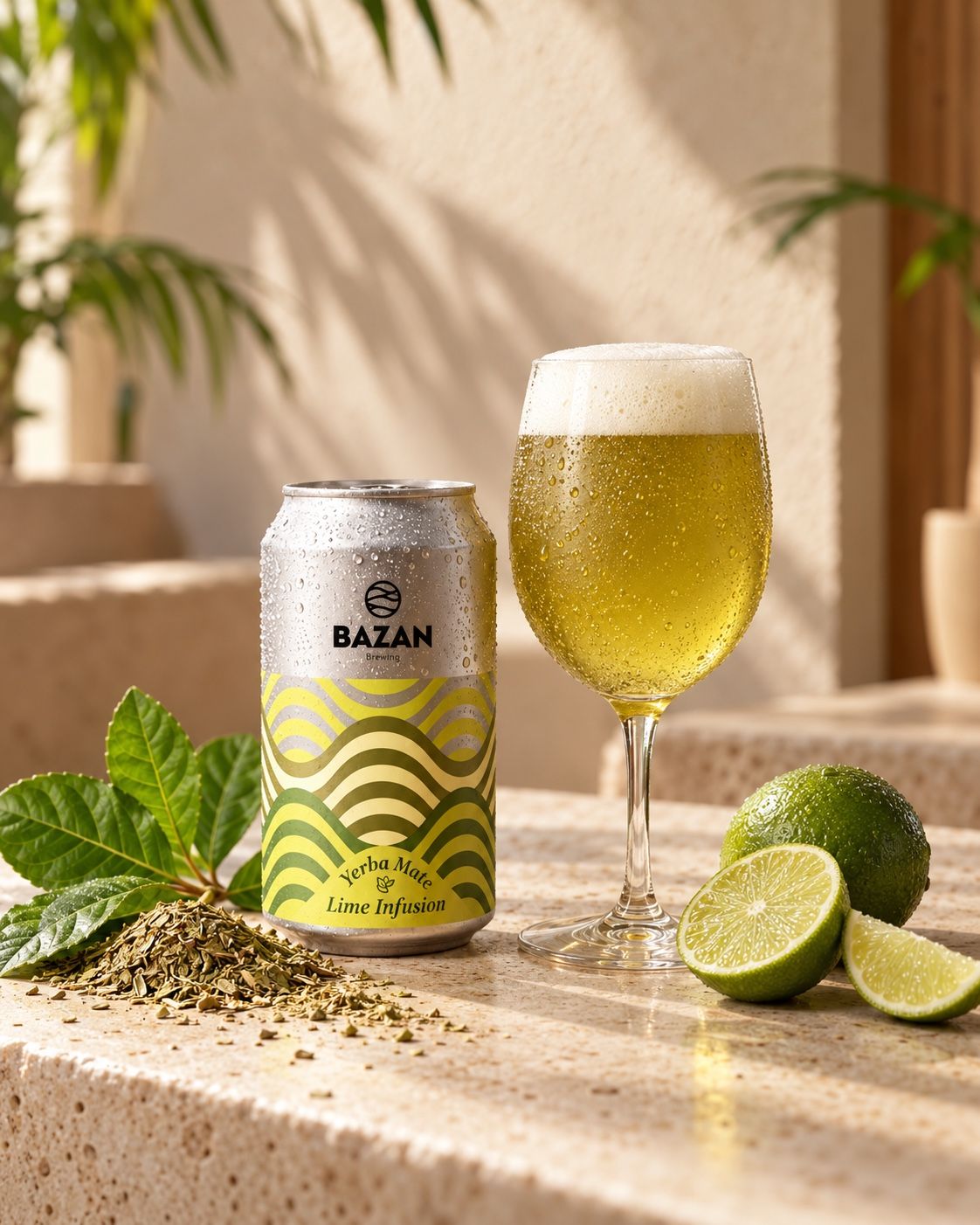
Yerba mate (in Argentina it is SHER-ba MAH-teh; elsewhere in South America YER-ba) is the leaf of a South American holly, dried, cut and brewed in water. In Argentina, Paraguay, Uruguay and southern Brazil it is the drink people share from a gourd through a metal straw, at home, at work and on the street, every day. We brew it, add Vietnamese lime and a few local herbs and spices, and carbonate it.
If you have picked up a can of our Yerba Mate Soda and wondered what the green, grassy thing in it is, this page is for you. Short version: it is the everyday brew of the southern half of South America, and it has been for a very long time.
The leaf
Yerba mate is Ilex paraguariensis, a holly, in the same genus as the spiky-leaved Christmas holly of Europe. It is an evergreen tree of the subtropical forests where Argentina, Paraguay and Brazil meet, along the Paraná and Paraguay rivers. Left alone it grows to 15 metres; on a plantation it is kept to shoulder height so the leaves can be picked.
The drink is made from the leaves and fine twigs. After picking they are passed quickly over a flame, a step called sapeco, which stops the leaf going brown and gives it its toasty edge, then dried, aged for months and milled. The result is a coarse green-khaki blend of leaf and stem that looks a little like dried herbs, and that is what yerba means: herb.
Brewed, it tastes grassy and green, with a toasted note, a gentle bitterness and a long dry finish. It is not a sweet or fruity thing on its own, which is exactly why it works so well with lime.
Where it came from
Long before any European saw it, the Guaraní people of the Paraná basin were picking wild mate leaves, drying them and drinking them in water. They called the plant ka’a, which simply means plant, and they treated it as a gift from the gods. The leaf was traded, chewed on long walks and shared at gatherings.
The Spanish settlers who arrived in the 1500s picked up the habit from the people they had conquered, and in the mid-1600s the Jesuit missions in what is now Misiones, Argentina, managed to grow the tree from seed, something no one had done before. Their plantations made mate a trading commodity across the Spanish empire, and for a while it was known as Jesuit tea. When the Jesuits were expelled in the 1760s the plantations fell into ruin, and the leaf went back to being gathered wild for another century.
The French botanist Auguste de Saint-Hilaire found the tree among the ruins of those missions in the 1820s and gave it its scientific name, paraguariensis, after Paraguay. Modern plantations only took off again in the early 1900s. Today Argentina is the largest producer, with almost all of its crop coming from Misiones and Corrientes, followed by Brazil and Paraguay.
How South America drinks it
Ask anyone from Buenos Aires or Montevideo and the first word is mate. The dried leaf goes into a hollow gourd (the word mate comes from the Quechua mati, gourd), hot water at about 70–80 °C is poured over it, and it is sipped through a bombilla, a metal straw with a filter at the bottom. One person, the cebador, refills the gourd and passes it around the circle. You drink it to the end, hand it back, and it comes round again. Saying gracias means you have had enough.
It is less a beverage than a way of sitting together. In Uruguay, which drinks more per person than anywhere else, people carry a thermos under one arm and a gourd in the other hand, on the bus, at the beach, at the office. Argentina and Uruguay both mark 30 November as National Mate Day.
Each country has its own version:
- Mate in Argentina and Uruguay: hot, often strong and bitter, sometimes sweetened or brewed with orange peel.
- Tereré in Paraguay: the same leaf brewed with iced water and crushed herbs, drunk through the hot afternoons. UNESCO added it to its intangible cultural heritage list in 2020.
- Chimarrão in southern Brazil: a finer, greener grind served in a large gourd, a symbol of hospitality in the gaúcho states.
If we had to pick a cousin for our soda, it would be tereré: cold, sharp and made for the heat.
Why it works as a soda
Mate has a few things going for it that most “botanical” sodas do not.
- It has backbone. The grassy, slightly bitter depth of the leaf gives a cold drink something to stand on, so it does not read as flavoured sugar water.
- It dries out the finish. The gentle astringency means the sweetness falls away quickly and leaves your mouth clean, which is what makes you want another sip.
- It likes citrus. Lime and mate have been paired in South America for a long time; tereré is often brewed with lime or lemon rind. The green, zesty top note sits on top of the toasted leaf and the two taste like they belong together.
The leaf also contains caffeine, as coffee and tea do. We do not add any; what is in the can comes from the leaf.
How we use it
Our yerba mate comes from Argentina. We brew the dried leaf, then add fresh Vietnamese lime and a few local herbs and spices, nothing artificial, and carbonate it. A South American leaf with a Vietnamese accent.
In the can: bold, grassy mate up front, a bright lift of lime zest, and a clean, dry citrus finish. Non-alcoholic, 5.3 g of sugar per 100 ml, 66 mg of caffeine per 330 ml can. It comes in cans and in 19.5 l kegs for bars.
Serve it ice-cold, straight from the can or over ice with a wedge of lime. A bright, sparkling alternative to your afternoon coffee.
Where to find Yerba Mate Soda →
Mate, the traditional way
If this page has made you curious about the ritual behind the leaf, mate the way it is drunk in Argentina, hot, from a gourd, through a bombilla, passed around the table, there is one place in Hà Nội we know of that does it properly: Del Plata, an Argentinian mate bar near West Lake in Tây Hồ. Go with a friend, sit for a while, and say gracias when you have had enough.
Frequently Asked
What is yerba mate?
Yerba mate is the dried leaf of Ilex paraguariensis, a holly tree native to the subtropical forests of northeast Argentina, Paraguay and southern Brazil. Brewed in hot water it makes mate, the everyday drink of the region. Yerba is Spanish for herb; mate is the drink and the gourd it is drunk from.
Is yerba mate a tea?
Not botanically. Tea comes from Camellia sinensis; yerba mate comes from a holly. It is brewed like a tea, though, and in English people often call it mate tea. The Jesuits called it Jesuit tea in the 1600s.
Does yerba mate contain caffeine?
Yes, naturally. The leaf contains caffeine, as coffee beans and tea leaves do. Our Yerba Mate Soda has 66 mg of caffeine per 330 ml can, all from the mate leaf.
Where does Bazan's yerba mate come from?
From Argentina, the world's largest producer, where the leaf is grown in the northeastern provinces of Misiones and Corrientes. Everything else in the can, the lime and a few local herbs and spices, is Vietnamese.
Is the Yerba Mate Soda alcoholic?
No. It is a non-alcoholic sparkling soda. It sits next to our ciders in the range, but there is no fermentation and no alcohol in it.
What is tereré?
Tereré is yerba mate brewed with cold water instead of hot, often with ice and herbs. It is the national drink of Paraguay and was added to UNESCO's list of intangible cultural heritage in 2020. Our soda is closer in spirit to tereré than to hot mate: cold, bright and made for the heat.
Where can I try or buy it?
We are putting together a list of the bars, cafés and shops that pour and sell it — see our stockists page. In the meantime, send us a message and we will point you to the nearest one.